
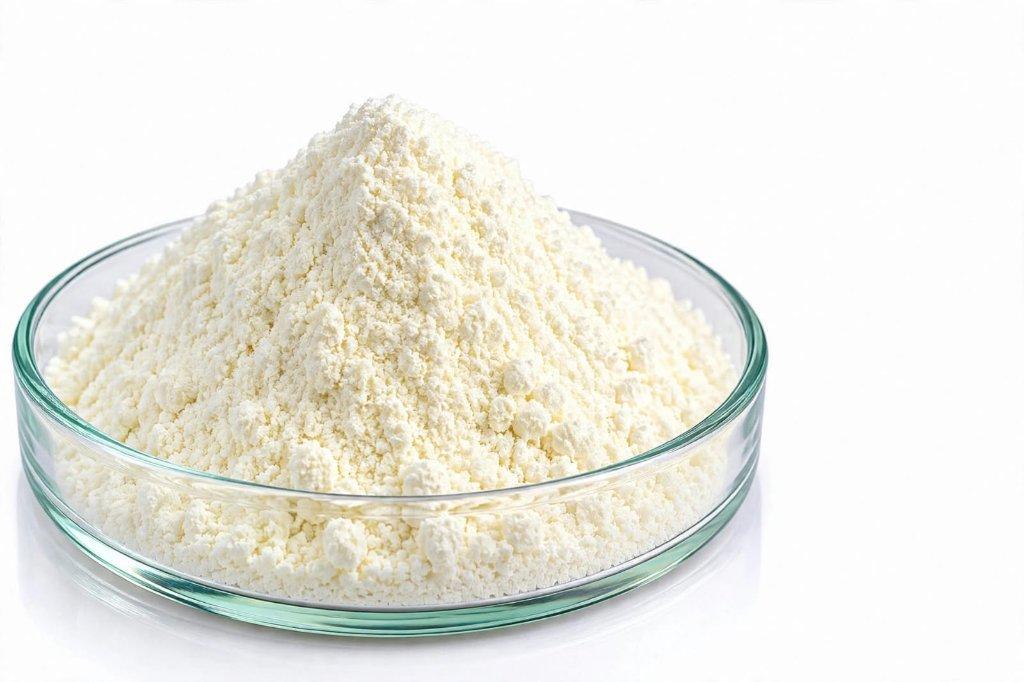
Gallic Acid
Chemical name: 3,4,5-Trihydroxybenzoic acid
High-purity natural polyphenolic antioxidant and synthesis building block for pharmaceutical APIs, gallate esters, leather tanning, and Folin-Ciocalteu analytical standards.
| CAS number | 149-91-7 |
| Purity | >= 99.0% |
| Appearance | White to yellowish crystalline powder |
| Formula | C7H6O5 |
| Packaging | 25 kg fiber drums or multi-wall kraft bags with inner moisture barrier |
| Minimum order | 500 kg |
About this chemical
Gallic Acid (3,4,5-Trihydroxybenzoic Acid) is a naturally occurring, water-soluble polyphenolic compound manufactured via the controlled hydrolysis of botanical gallotannins. Characterized by a benzene core substituted with three hydroxyl groups and a carboxylic acid function, Gallic Acid is renowned worldwide for its extraordinary capacity to quench free radicals and combat oxidative stress. It is a critical industrial compound across pharmaceuticals (API synthesis including trimethoprim), food antioxidants, dermatological cosmetics, collagen-binding leather tanning, textile dyeing, and historical iron gall ink formulations. Furthermore, Gallic Acid serves as the universal analytical calibration standard in the Folin-Ciocalteu assay, where Total Phenolic Content (TPC) is formally quantified in Gallic Acid Equivalents (GAE).
Common applications
Functions as a key chemical precursor in the industrial synthesis of antibacterial drugs such as trimethoprim, as well as therapeutic drug design targeting oxidative pathology.
Essential chemical feedstock for the commercial manufacture of Propyl Gallate, Octyl Gallate, pyrogallol, and pyrocatechol derivatives.
Neutralizes free radicals, stabilizes active cosmetic serums, and provides skin-firming, astringent, and brightening benefits in topical beauty formulations.
Readily binds with proteins and structural collagen during the tanning process, imparting dimensional stability, suppleness, and durability to premium leather.
Used as a mordant and dyeing agent for natural and synthetic fabrics, and as an intermediate in specialized dye synthesis.
Reacts with iron salts to produce indelible iron gall writing inks and specialty chemical formulations for high-resolution printing processes.
Universally employed as the reference standard for measuring Total Phenolic Content (TPC) via the Folin-Ciocalteu method, reporting results in Gallic Acid Equivalents (GAE).
Used in analytical antioxidant evaluation and selected food-contact systems to retard oxidative degradation in plant and lipid extracts.
Product specifications
Values shown are standard specifications. Lot-specific test results are supplied with each dispatch.
| Parameter | Specification | Test method |
|---|---|---|
| Appearance | White to yellowish crystalline powder | Visual |
| Assay (dry basis) | >= 99.0% | HPLC / Titration |
| Melting range (decomposition) | 251.0°C to 253.0°C | Capillary |
| Loss on drying | <= 10.0% (monohydrate form) | 105°C |
| Residue on ignition | <= 0.10% | Sulphated ash |
| Sulfate (SO4) | <= 0.02% | Turbidimetric |
| Heavy metals (as Pb) | <= 10 ppm | ICP-MS |
Packaging and storage
- 25 kg fiber drums with sealed inner polyethylene liners
- 25 kg multi-wall craft paper bags with moisture-barrier lamination
Store in tightly closed original containers in a cool, dry, well-ventilated space protected from light and moisture. Gallic acid darkens if exposed to moisture and air.
24 months when stored in original unopened containers under recommended dry conditions.
Frequently asked questions
Related products
All productsPropyl Gallate
Triple-hydroxyl phenolic gallate ester providing potent radical-quenching efficacy for edible fats, synthetic Vitamin A, cosmetic emulsions, and dielectric transformer oils.
BHA
Versatile fat-soluble phenolic antioxidant with exceptional carry-through baking stability, protecting edible fats, cosmetics, pharmaceuticals, essential oils, and packaging liners.
BHT
High-purity lipophilic crystalline antioxidant providing chain-breaking thermal and oxidative stabilization across edible oils, pharmaceuticals, polymers, rubber, lubricants, and animal feeds.